Titanium Fountain Pen: Finish, Weight and the Green Ink Window
Published · 5 min read (estimated)
A titanium fountain pen is not just a lighter brass pen. What the brushed finish, 41.5 g weight and green ink window show in daily carry.
Titanium is usually sold as a list of adjectives: light, strong, corrosion-resistant, premium. Those things are true, but they are not what you notice after a week. What you notice is the finish in your hand, the weight at the back of the barrel, and whether the ink window tells you something useful before a meeting.
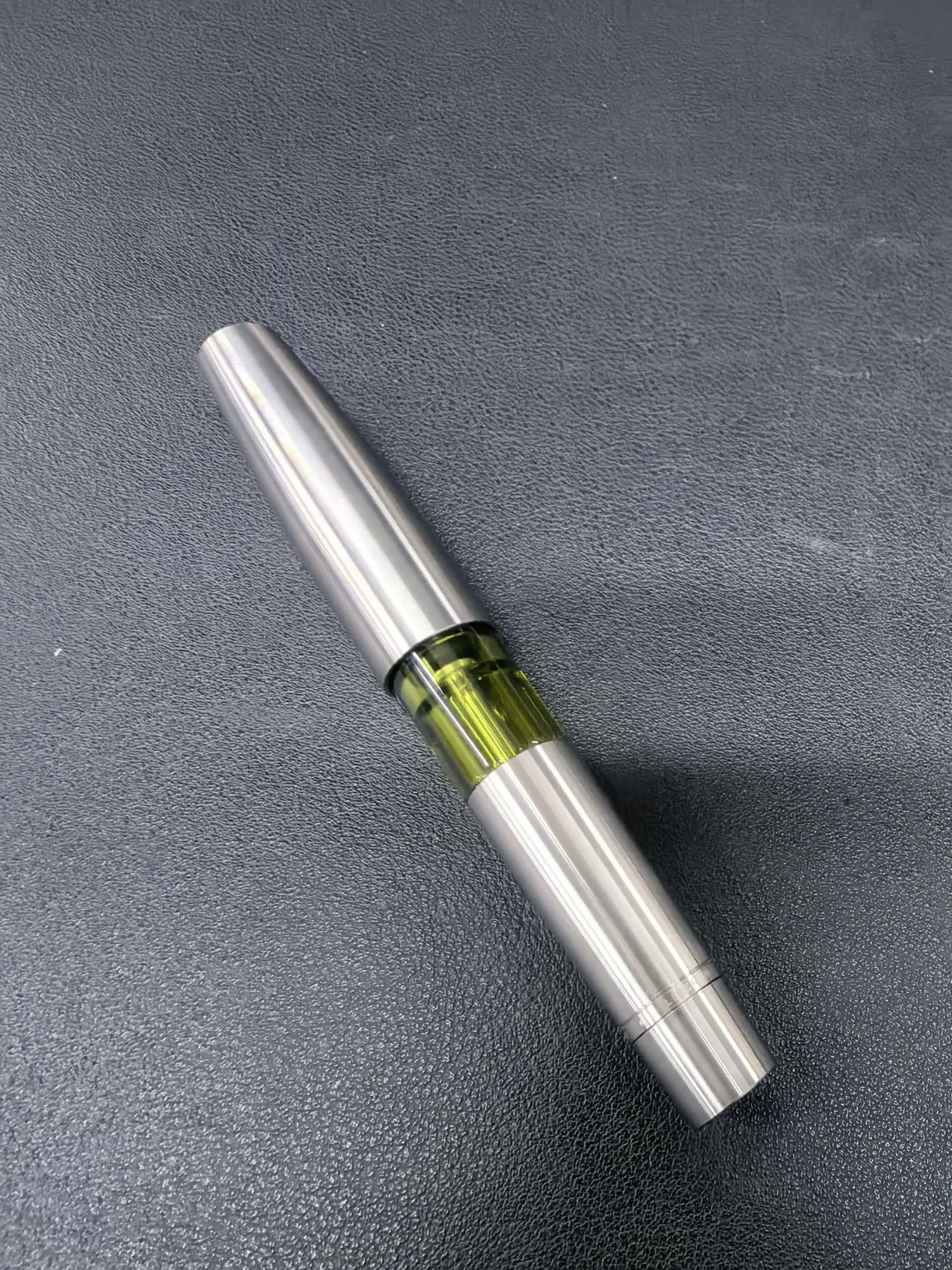
The Volucris capped at 120 mm. The green ink window sits between the cap and the barrel.
The finish is brushed, not hidden
The titanium body in these photos has a brushed finish. Fine linear marks run along the barrel and catch the light; the surface is not a mirror polish and it is not a uniform matte coating. The cap and barrel meet with a visible seam, and the surface stays deliberately plain.
That finish has a practical consequence: it shows handling marks. Titanium is tough, but "tough" is not "scratch-proof". Keys, coins and a loose bag will leave their mark eventually. If you want a pen that looks new after a year, carry it in a sleeve. If you accept that a metal pen develops a record of use, the brushed surface hides small marks better than a polished one.
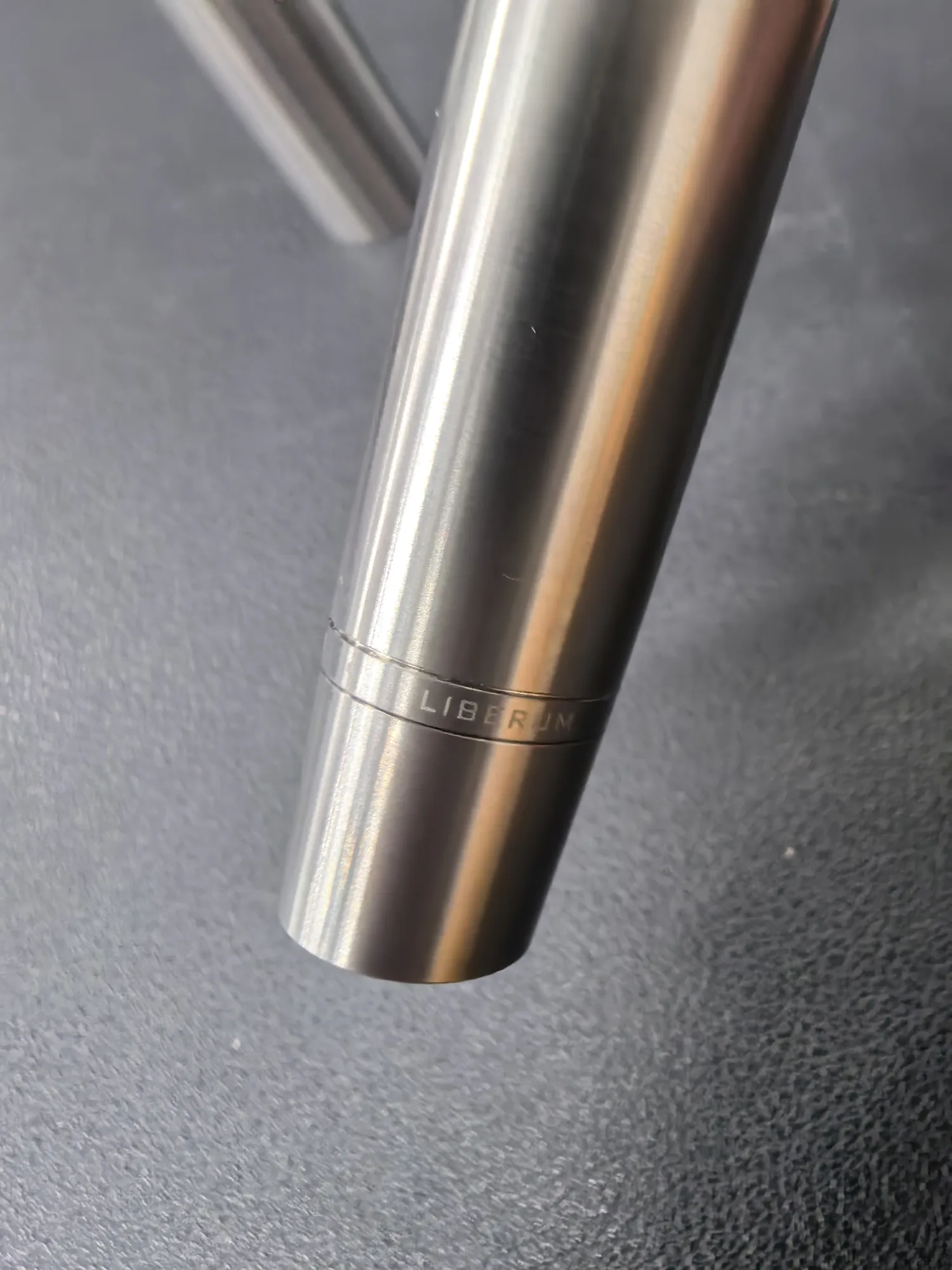
The LIBERUM name is engraved into the titanium, not printed on top of it.
What 41.5 g actually feels like
The titanium Volucris is 41.5 g capped and 28.4 g uncapped. About 13 g of the total is the cap, so the part you hold is closer to 28 g.
That is light for a metal pen, but it is not a plastic pen. It feels deliberate in the hand, and it stays stable on the page without asking you to grip harder. The brass version is 66 g capped and 42 g uncapped; it is a different experience, not a slightly heavier one.
The useful comparison is not "titanium versus steel" in the abstract. It is the pen you already use. If your current pen is a 20 g plastic pocket pen, 28 g uncapped will feel substantial. If it is a 45 g metal pen, the titanium Volucris will feel like a relief.
The green ink window is a real gauge
The window is not decoration. It shows the ink level in the barrel, behind the piston. On a vacuum filler, that is the actual reserve, not the contents of a converter.
It is still not a calibrated gauge. It will not tell you "four pages left". It tells you whether you have a comfortable supply or are close to empty, which is the question that matters before you leave the house.
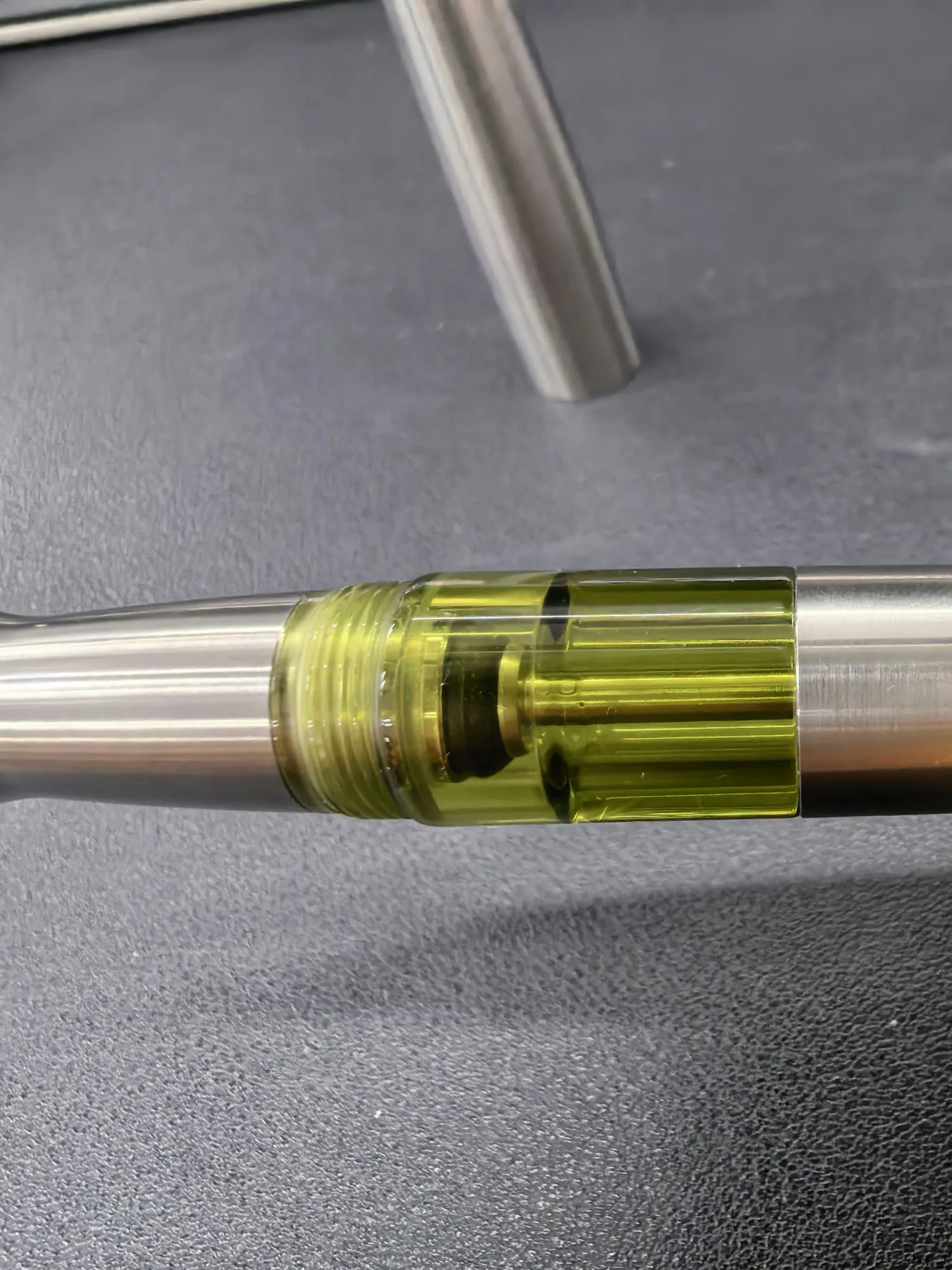
The green window on the titanium version. The internal piston and ink level are visible through the barrel.
The back of the pen
The vacuum rod is the part that makes the compact body possible. The rod extends from the back of the barrel and creates the pressure difference that draws ink in from a bottle. The rear assembly in the photo shows the metal rod and a brass-coloured threaded collar; it is a mechanical part, not a decorative cap.
That mechanism is why the pen can be 120 mm and still hold a serious ink supply. It is also why the pen needs a bottle of ink and a cleaning routine. If you want cartridges, this is the wrong pen.
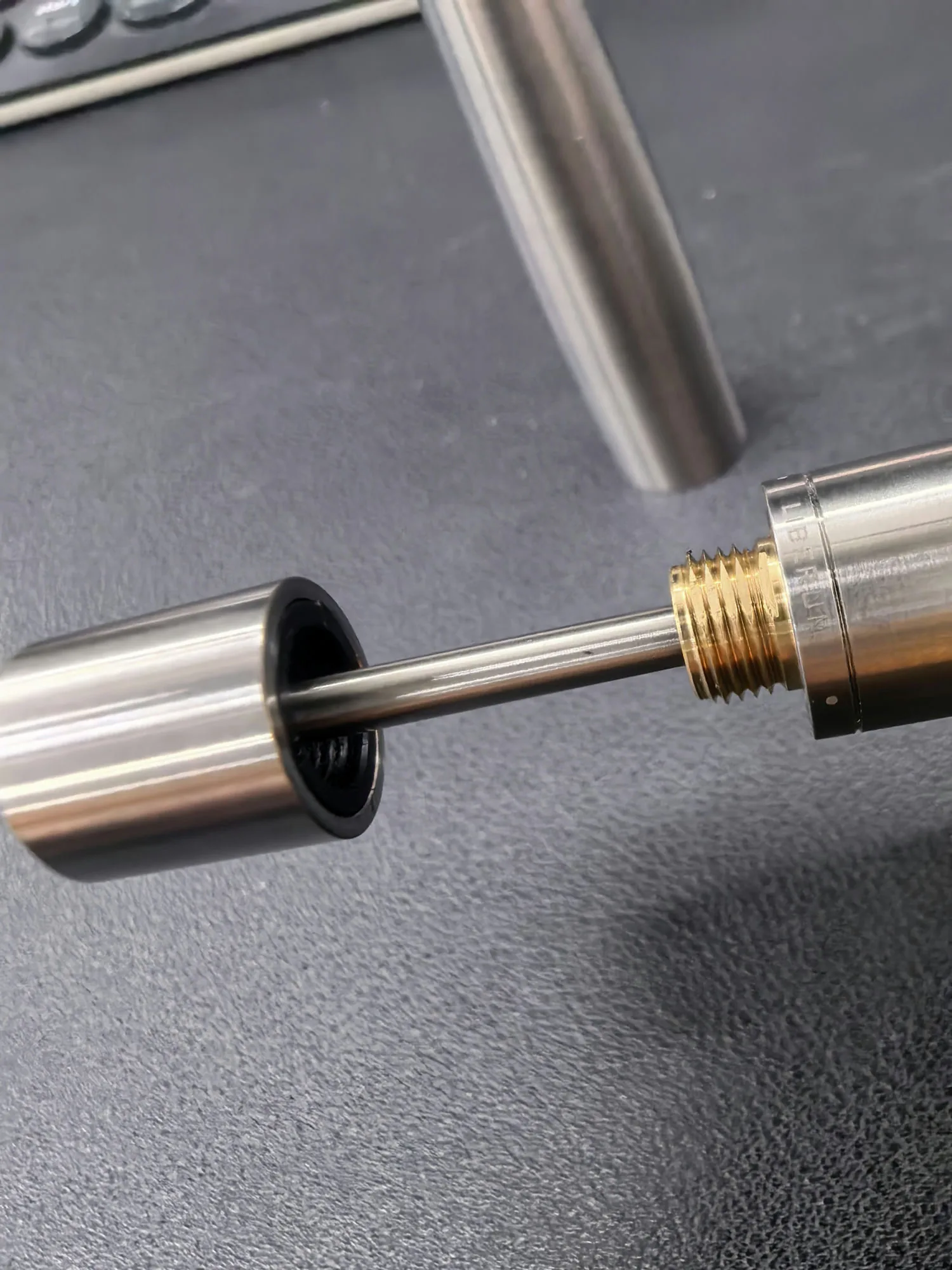
The rear of the pen with the vacuum rod extended. The brass-coloured threaded part is part of the rear assembly.
Titanium or brass?
Choose titanium if you want the lighter pen and write for long stretches. Choose brass if you want the weight, the warmer feel and the patina. Neither material makes the pen comfortable for every hand.
The titanium version is the better daily carry for most people because 41.5 g is easier to forget in a pocket than 66 g. The brass version is the better object if you like a pen that announces itself every time you pick it up.
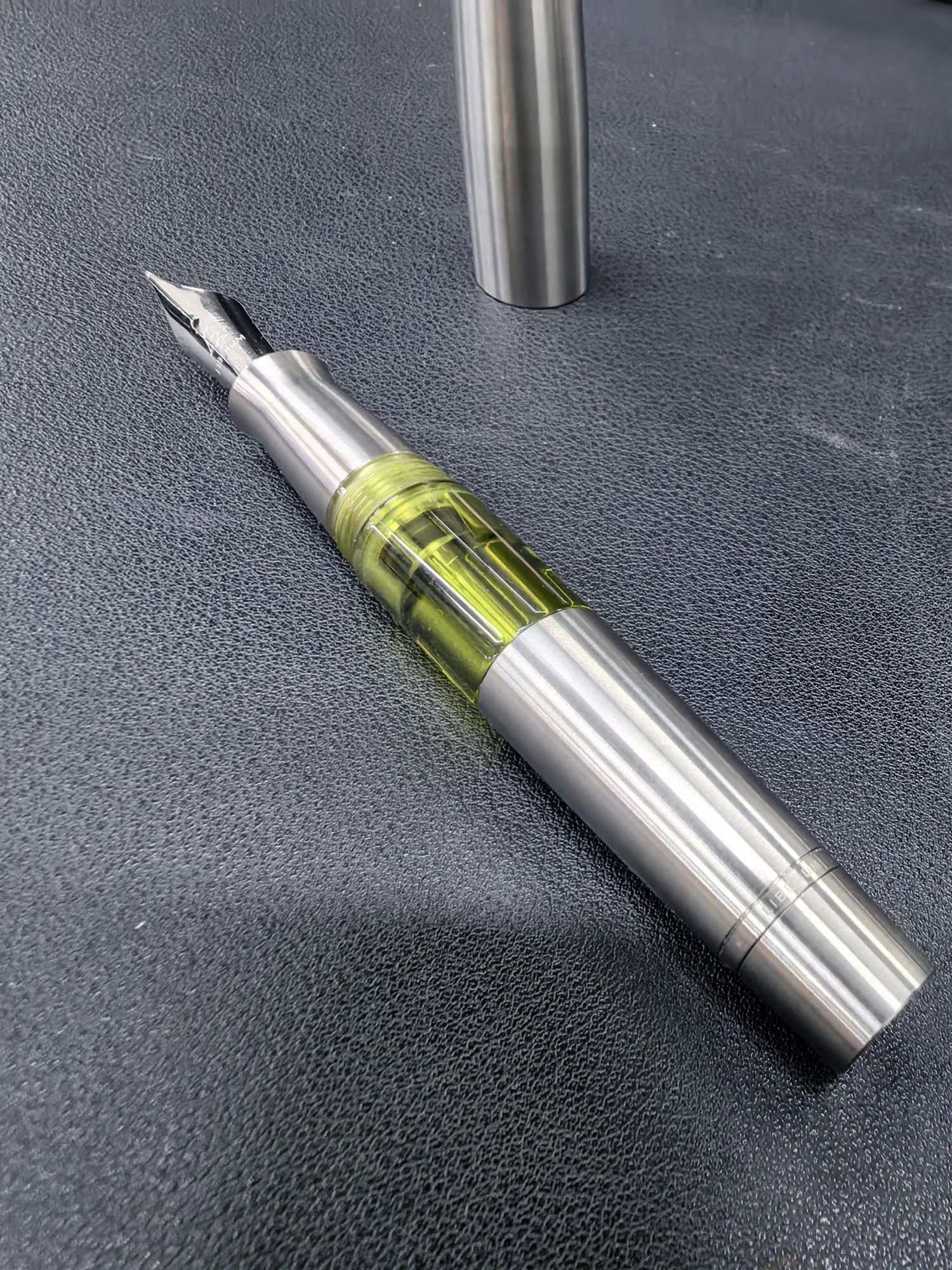
Uncapped at 120 mm, with the cap standing behind. The green window and the #6 nib are the two details you see most while writing.
Who it suits
- Daily carry in a shirt or jacket pocket. 120 mm fits without dominating the pocket.
- Longer writing sessions. The uncapped weight is low enough to stay comfortable.
- People who like metal but not heaviness. Titanium is the lighter of the two Volucris versions.
- Writers who want a visible ink supply. The green window is genuinely useful.
It is a worse choice if you want a pen under 30 g, if you dislike visible machining marks, or if you need something that disappears into a jeans coin pocket. In those cases, a smaller cartridge pen is the better tool.
Where to go next
- Liberum Volucris Titanium: 41.5 g, green ink window, #6 steel nib.
- Liberum Volucris Brass: 66 g, clear ink window, brass patina.
- What 120 mm actually means: length, grip and pocket fit.
- Vacuum filler fountain pen guide: filling and cleaning.
- Fountain pen nib unit explained: the #6 nib, feed and housing.
- Best pocket fountain pens: how the Volucris compares with cartridge pens.
Liberum makes the Volucris. The photos show our own titanium pen; weights and dimensions are from the current product specification.