
Fountain Pen Nib Unit: Nib, Feed and Housing Explained
Published · 5 min read (estimated)
A fountain pen nib unit is more than the nib. What the nib, feed and threaded housing do, and what to check before swapping one.
Most people call the whole front of a fountain pen "the nib". That is not quite right. The part that touches the paper is only one piece of a small assembly: a metal nib, a feed underneath it, and a housing that screws into the barrel. Once you see the three parts separately, swapping a nib stops being mysterious — and so does the reason some pens cannot take just any nib.
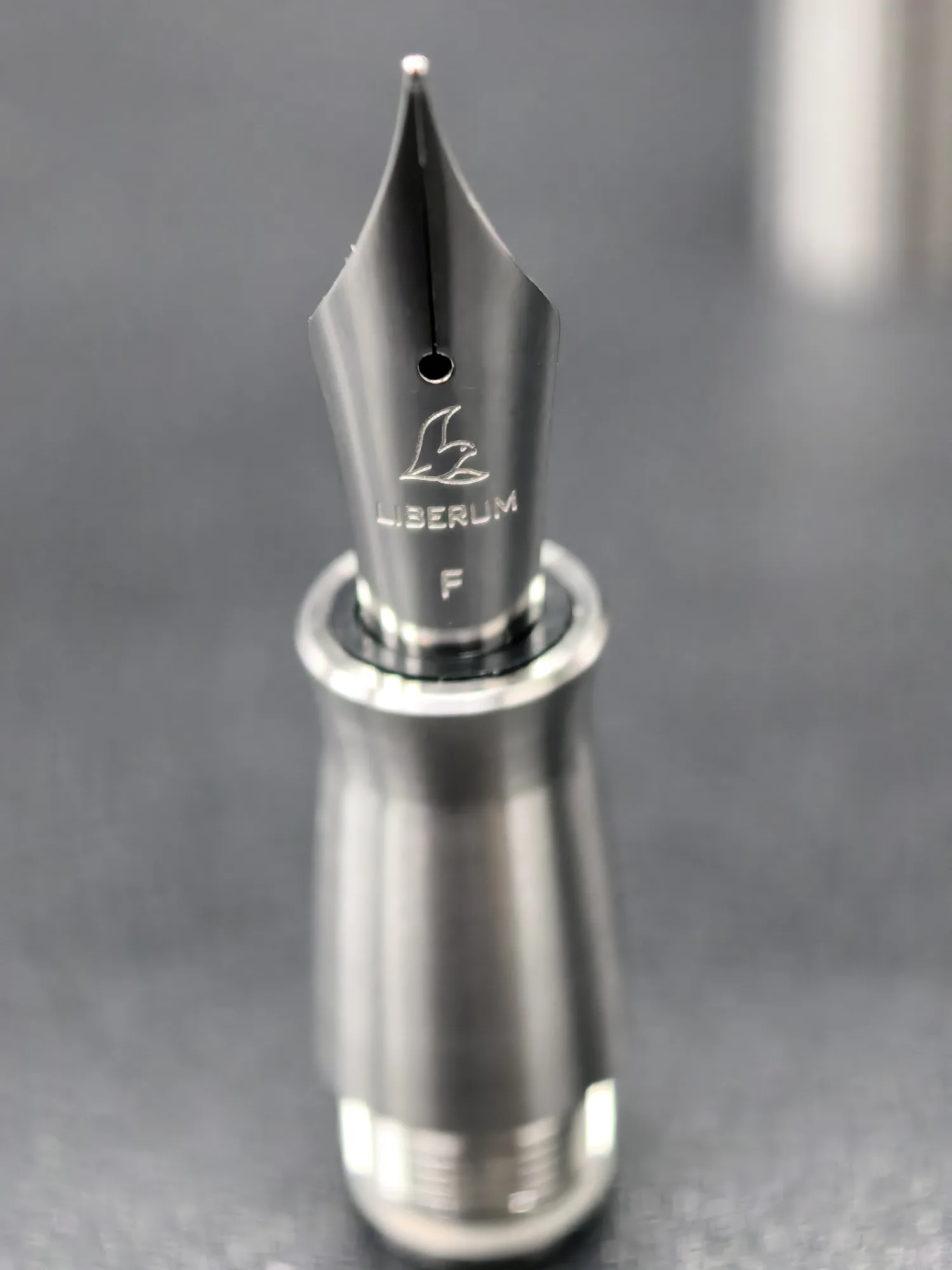
The Liberum #6 nib in F width. The bird mark, the LIBERUM name and the width letter are all on the face.
The three parts of a nib unit
The nib. The metal plate with the slit, breather hole and tipping. It bends slightly as you write and controls how much ink reaches the paper. On this pen it is stainless steel, marked F for fine.
The feed. The black part underneath the nib. The fins hold ink and buffer sudden flow; the channel underneath carries ink from the barrel to the nib. In these photos it is the standard plastic feed.
The housing. The threaded collar that holds the nib and feed together and screws into the section. This is what makes a nib unit replaceable as one piece.
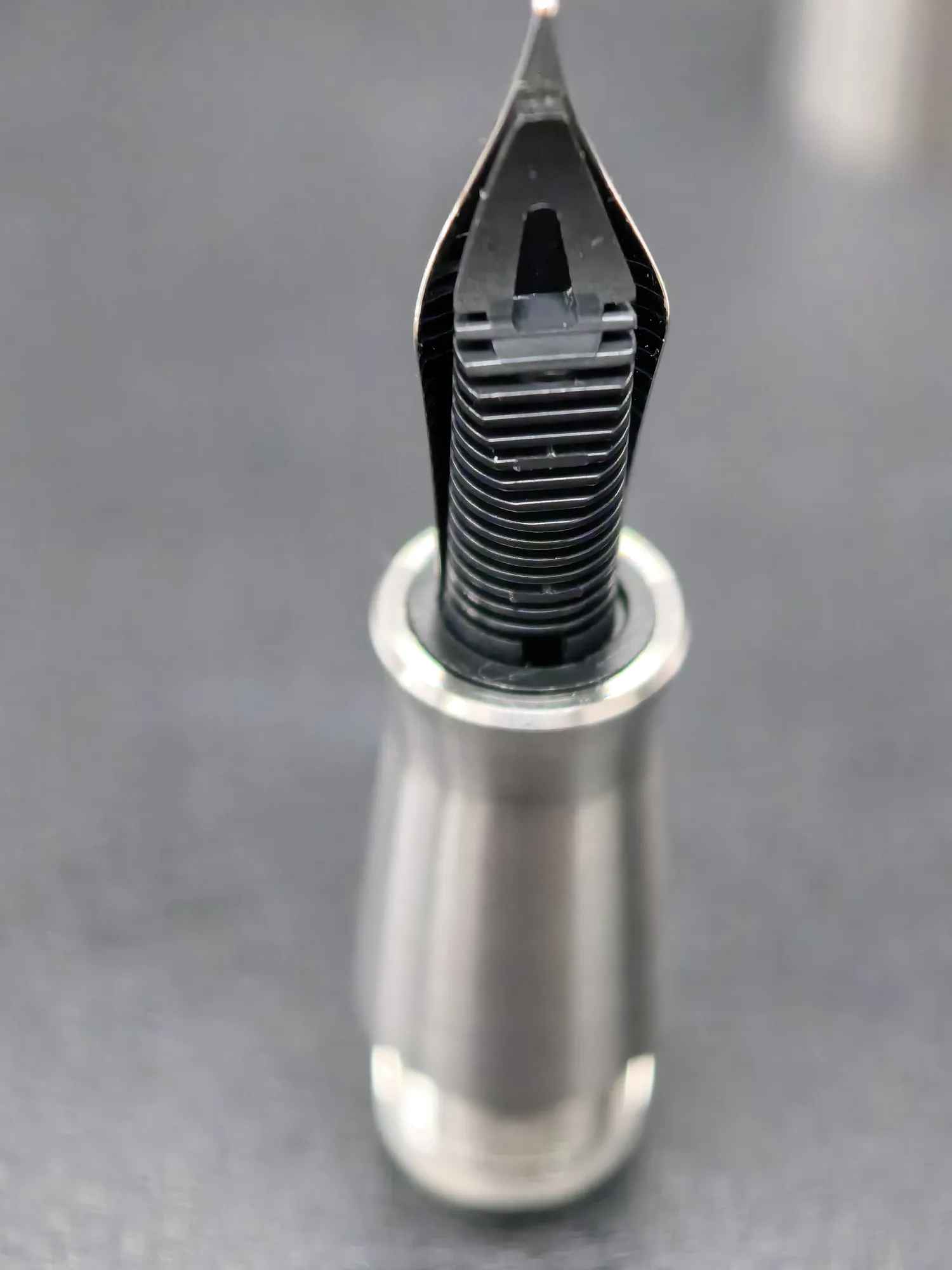
The feed under the nib. The fins are the ink buffer; the narrow channel is what carries ink to the tip.
What "#6" does and does not mean
A #6 nib is a size family, not a line width. The number describes the physical size of the nib and housing, not whether the pen writes like a fine or a broad. Two #6 nibs can write completely different lines.
On the Volucris, the #6 nib is offered in extra fine, fine, medium and broad. The letter on the nib is the width you ordered. If you want a different line, choose a different width — not a different brand of #6 nib and hope it fits.
JoWo #6 compatibility, precisely
The Volucris housing is compatible with JoWo #6 threaded nib units. Liberum has confirmed that through assembly testing. This is useful because it means the nib is not proprietary: you can unscrew the complete unit and fit another compatible one.
It does not mean every nib sold as "#6" will fit. Thread pitch, housing length and feed shape vary. Check the complete unit, not just the number on the listing.
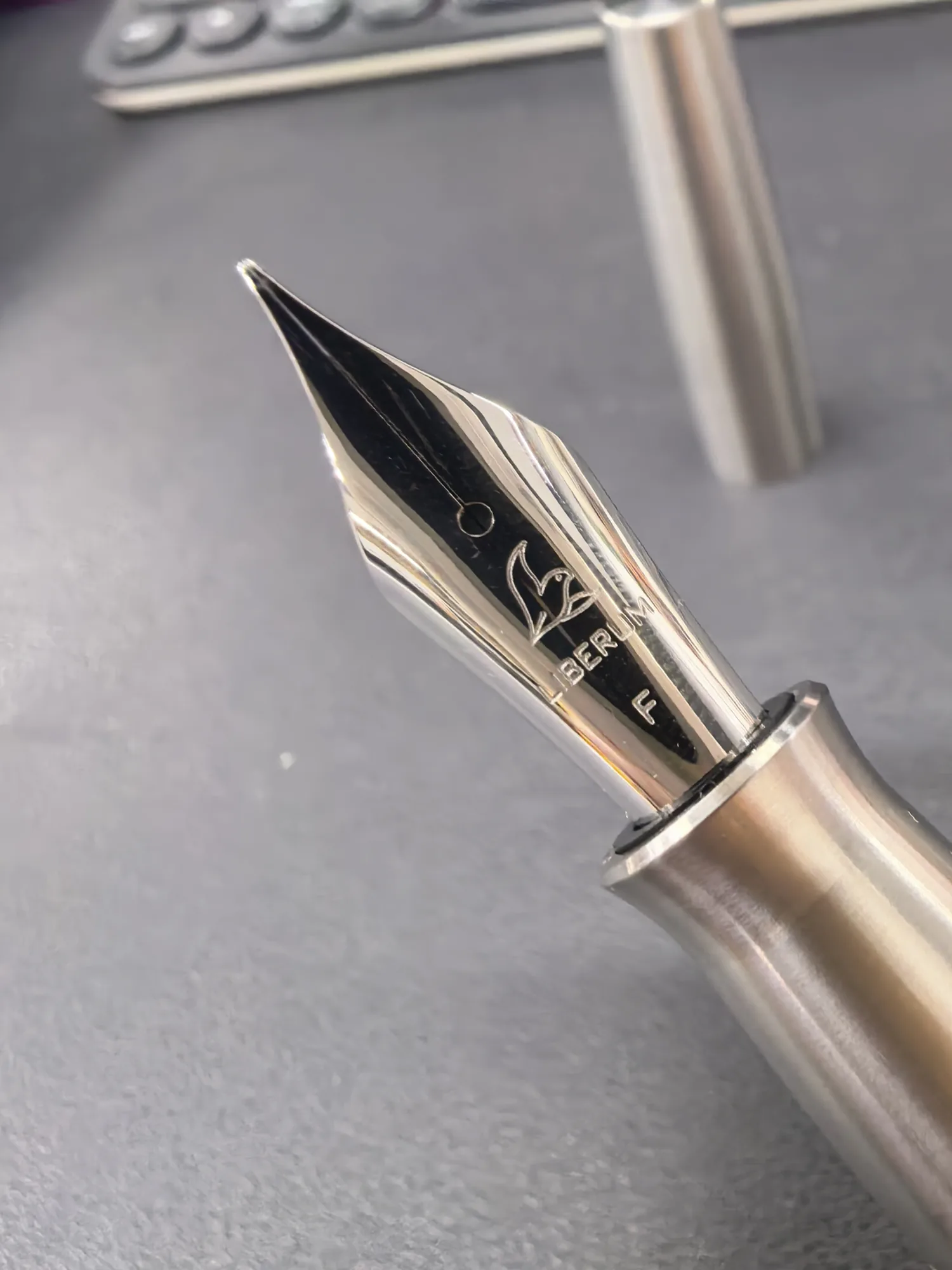
The nib, feed and housing together. The threads at the base are what screw into the section.
Plastic feed or ebonite feed?
The feed in these photos is the standard plastic feed. It is the part that comes installed in the pen.
An ebonite feed is a separate option. Ebonite is a hard rubber material that can be hand-cut and adjusted; some writers prefer it for very wet inks or for tuning flow. It is not automatically better for every ink, and it is not visible in these photos. If you order the optional ebonite-feed unit, you receive one extra unit alongside the installed nib — not a second pen.
The honest advice: if the standard feed writes the way you want, keep it. Change the feed only when you have a specific flow problem or a reason to experiment.
When swapping a nib unit makes sense
- You want a different width. The cleanest reason. Buy the width, not a whole new pen.
- You damaged the nib. A replacement unit is cheaper than replacing the pen.
- You want a spare. Useful if you travel or write with more than one ink.
- You like tuning. A threaded housing makes experimentation reversible.
It makes less sense if you are happy with the width and never damage a nib. A replaceable unit is a good feature, not a requirement.
How to remove and refit one
- Empty and flush the pen first. Ink makes the job messier and hides the threads.
- Unscrew the complete unit from the section. Do not pull the nib and feed out of the housing unless you know that specific unit is designed for it.
- Keep the nib and feed aligned. The feed sits under the nib, in line with the slit.
- Thread it back in by hand. It should turn smoothly. If it resists, stop; cross-threading a housing is an expensive mistake.
- Flush and test with water before filling with ink.
Do not force anything. The unit is meant to come apart; it is not meant to be pried apart.
What to check before buying a replacement
- The housing thread, not just the nib size.
- The complete unit length, including the feed.
- The width you actually want, in the maker's labelling.
- Whether the seller supplies the whole unit or only a bare nib.
A bare nib is not a drop-in replacement. A complete unit is.
Where to go next
- Liberum Volucris Titanium: #6 stainless steel nib, JoWo-compatible housing, green ink window.
- Liberum Volucris Brass: the same nib unit in a heavier brass body.
- Optional ebonite-feed nib unit: one separate unit, no pen included.
- Vacuum filler fountain pen guide: how the rest of the pen fills and cleans.
- Best pocket fountain pens: how the Volucris compares with cartridge pens.
Liberum makes the Volucris. The photos show our own F-width nib unit; the compatibility and width notes are specific to the current Volucris configuration.