
Vacuum Filler Fountain Pen: How It Works and How to Clean It
Published · 6 min read (estimated)
A vacuum filler fountain pen draws ink straight from the bottle. How the mechanism works, how to fill it, and how to clean it without forcing the rod.
Most fountain pens ask you to choose between a small cartridge and a converter that holds barely more. A vacuum filler skips both. The ink goes into the barrel itself, behind a piston, and a rod at the back of the pen does the work. It is the reason a pen this short can hold a serious ink supply — and the reason it needs a different filling and cleaning routine.
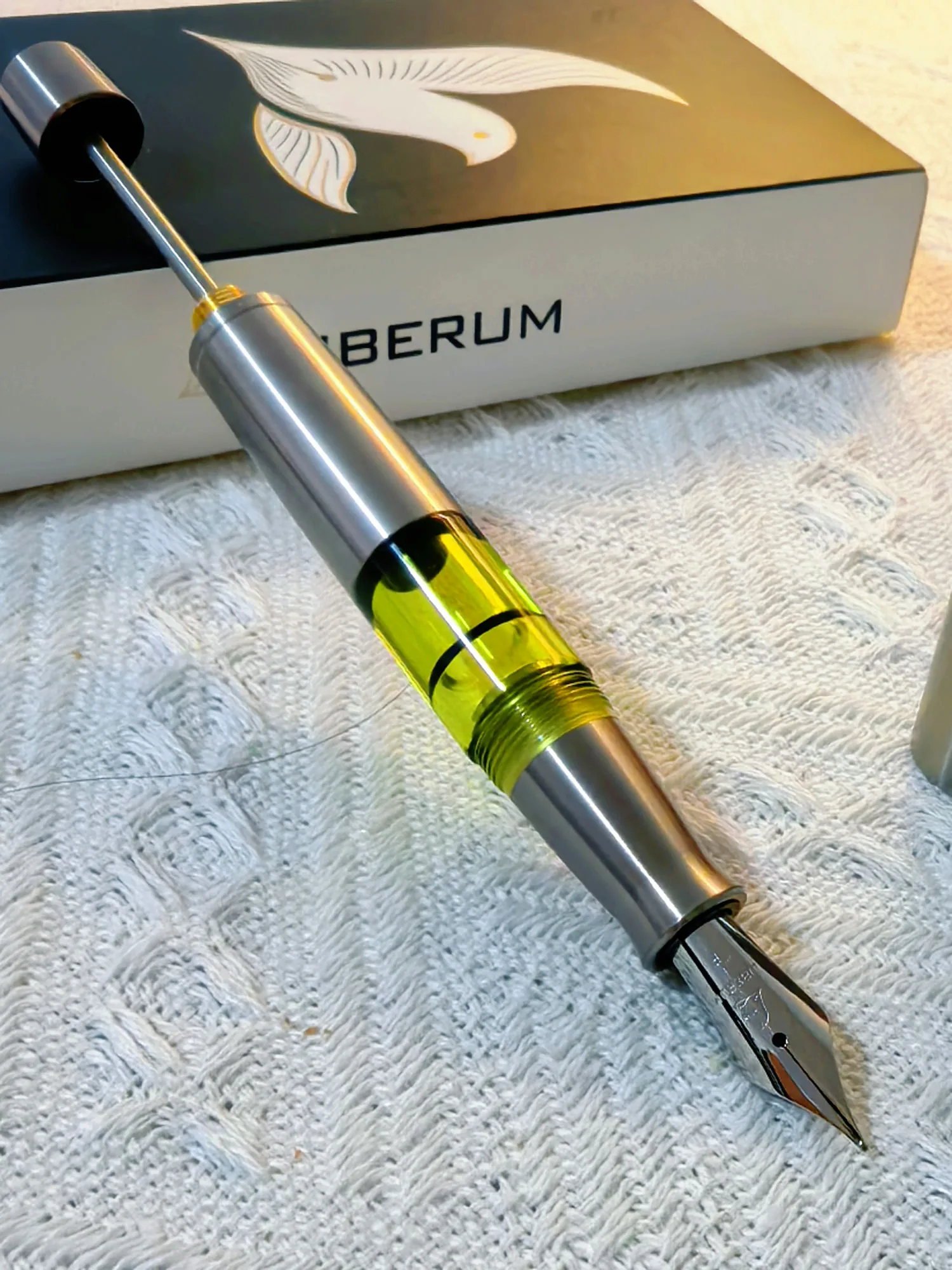
The Volucris with the vacuum rod extended. The green window shows the ink sitting in the barrel, not in a converter.
What a vacuum filler actually does
A cartridge pen stores ink in a small plastic tube. A converter pen stores it in a removable piston converter. A vacuum filler stores it in the barrel, between a piston and the section.
Pulling the rod back creates a vacuum in the barrel. When you push the rod down with the nib in ink, the pressure difference pulls ink up into the barrel. One or two cycles is usually enough. There is no cartridge to buy and no converter to unscrew itself loose in a bag.
That is the trade: more ink and fewer refills, in exchange for a bottle of ink and a cleaning routine you cannot skip.
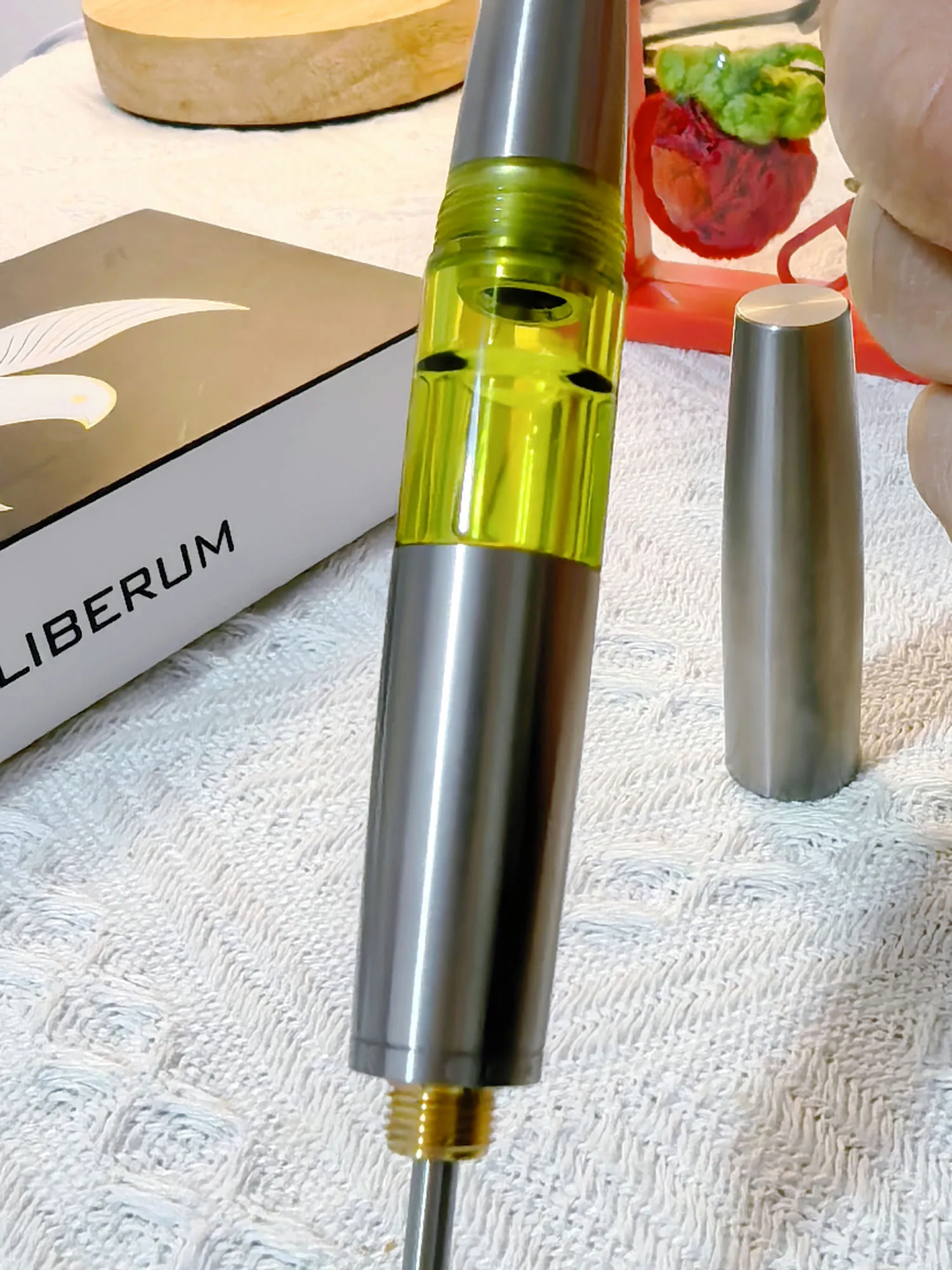
The rod extends from the back of the barrel. The cap is off to the right.
The parts you can see
The photos show the parts that matter:
- The nib unit. A #6 stainless steel nib in a threaded housing. On the Volucris it is a Liberum-marked F nib in this photo, and the housing is compatible with JoWo #6 units.
- The section. The metal grip area between the nib and the barrel. It unscrews as one unit with the nib housing.
- The barrel. Titanium on this version, with a green ink window.
- The plunger rod. The metal rod and end cap at the back. This is what creates the vacuum.
- The cap. It protects the nib and seals the section in a pocket.
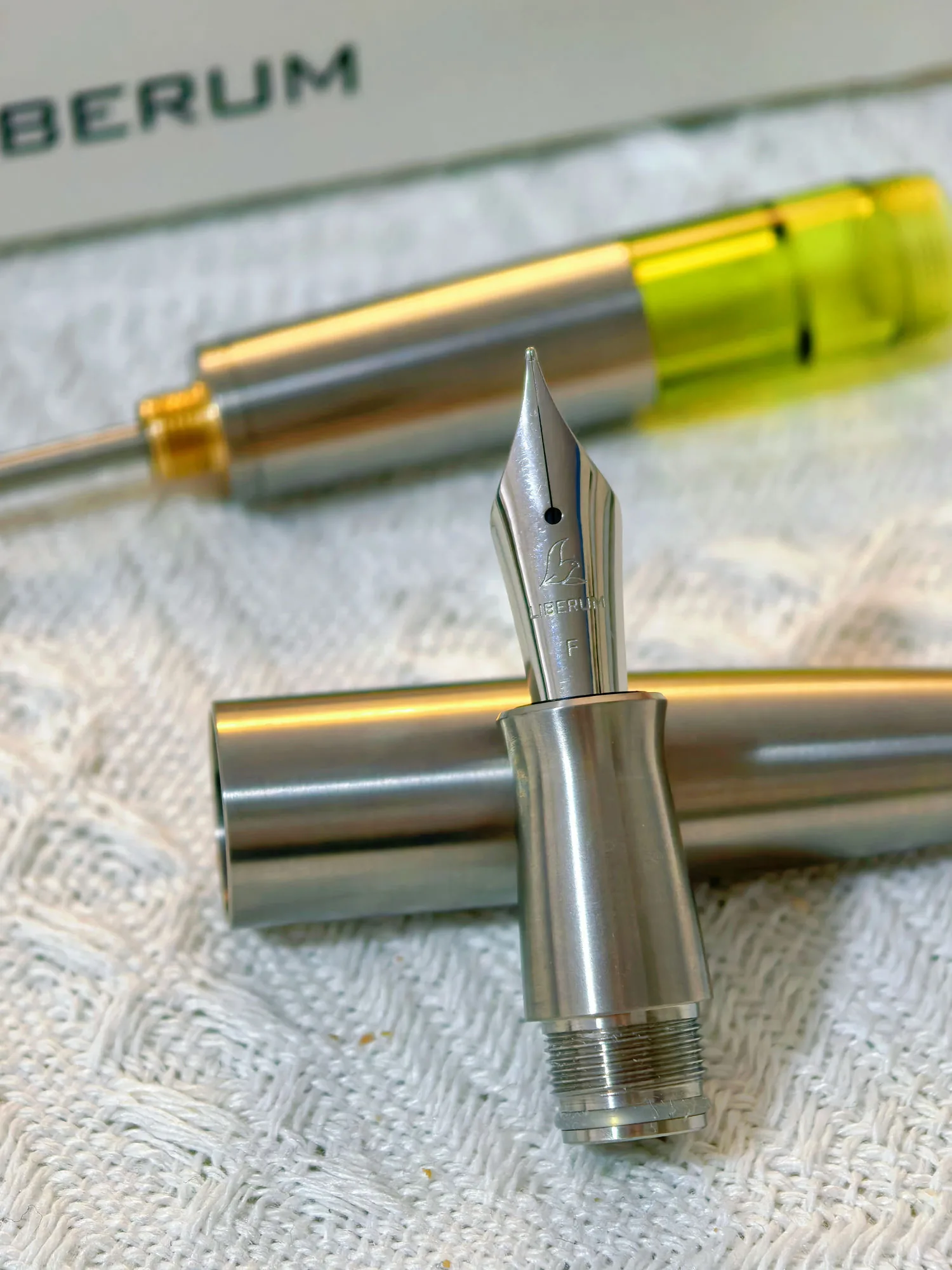
The nib unit and section removed from the barrel. The threads are visible at the bottom.
How to fill it
- Pull the rod back slowly. Do it over the bottle, not over the desk. The rod should move smoothly; if it does not, stop and check the instructions for your model.
- Put the nib far enough into the ink that the breather hole and feed are covered. Do not just touch the tip to the surface.
- Push the rod down. This expels air from the barrel.
- Pull it back up. Ink is drawn into the barrel.
- Repeat once if the window still looks empty. Some pens need a second cycle to fill completely.
- Wipe the nib and section with a lint-free cloth before writing.
Do not force the rod at either end of its travel. It should stop naturally.
How to clean a vacuum filler fountain pen
Cleaning is where a vacuum filler earns its keep or becomes a chore. The routine is simple, but it is not optional.
- Empty the ink. Write or return the ink to the bottle if you are changing colours. Do not store the pen full for months.
- Fill with lukewarm water. Draw water in and push it out through the nib. Repeat until the water runs clear.
- Cycle the rod several times. This flushes the barrel, not just the feed. Five cycles is a reasonable start for a dark or saturated ink.
- Remove the nib unit if the pen is very dirty. The section unscrews as one piece. Soak the nib and section in lukewarm water, then flush the barrel separately.
- Use a pen flush only if water is not enough. Follow the product instructions and rinse thoroughly afterwards.
- Dry nib-down on a paper towel. Let the feed draw water out. Reassemble only when the parts are dry.
Do not use hot water, alcohol or household cleaners. Do not force the nib unit or the rod. If a part resists, stop and ask before applying more force.
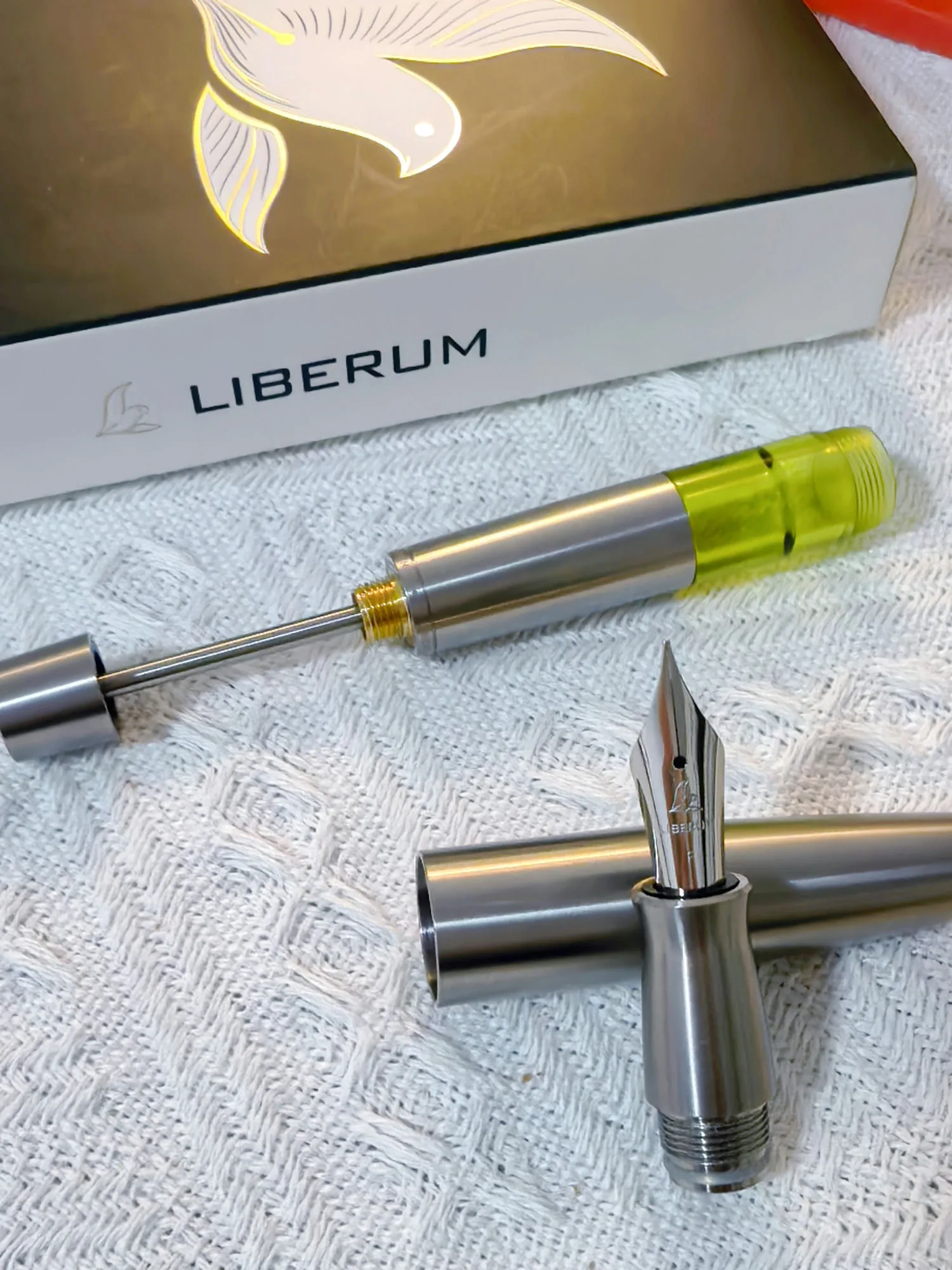
The Volucris apart: cap, barrel with green window, plunger rod, section and nib unit.
What the ink window tells you
The green window is not decoration. It shows the ink level in the barrel, behind the piston. You can see how much reserve you have before a meeting or a trip without shaking the pen.
It is a visual check, not a calibrated gauge. It does not tell you how many pages are left, because that depends on the nib width, the ink and how you write.
Who a vacuum filler suits
Buy one if you write more than a page a day, you already use bottled ink, or you travel and do not want to carry spare cartridges. The Volucris adds a metal body and a 120 mm pocket length to that list.
Do not buy one if you want the convenience of cartridges, you change ink colours every few days, or you dislike cleaning pens. A cartridge pen is the better tool for that job.
The titanium Volucris is 41.5 g capped and 28.4 g uncapped. The brass version is 66 g capped and 42 g uncapped. Both use the same vacuum filling system and the same #6 nib unit. If you are choosing between them, the decision is weight, not mechanism.
Where to go next
- Liberum Volucris Titanium: 41.5 g, green ink window, #6 steel nib.
- Liberum Volucris Brass: 66 g, clear ink window, brass patina.
- Vacuum filler fountain pens: the current Liberum range.
- What 120 mm actually means: length, grip and pocket fit.
- Best pocket fountain pens: how the Volucris compares with cartridge pens.
- Fountain pen gift guide: if you are buying for someone else.
Liberum makes the Volucris. The photos show our own pen; the filling and cleaning steps are the routine we use. Follow the instructions supplied with your pen if they differ.