Pocket Fountain Pen Sizes: What 120 mm Actually Means
Published · 5 min read (estimated)
120 mm capped, 41.5 g in titanium, 66 g in brass. What those numbers mean for grip, balance and pocket fit.
Weight is the number you notice in a shop in ten seconds. Length is the one you live with. A 120 mm pen is about 15 to 20 mm shorter than a typical pen built around a #6 nib, and that difference changes where the pen balances, where your fingers land, and which pocket it actually fits.
What 120 mm actually measures
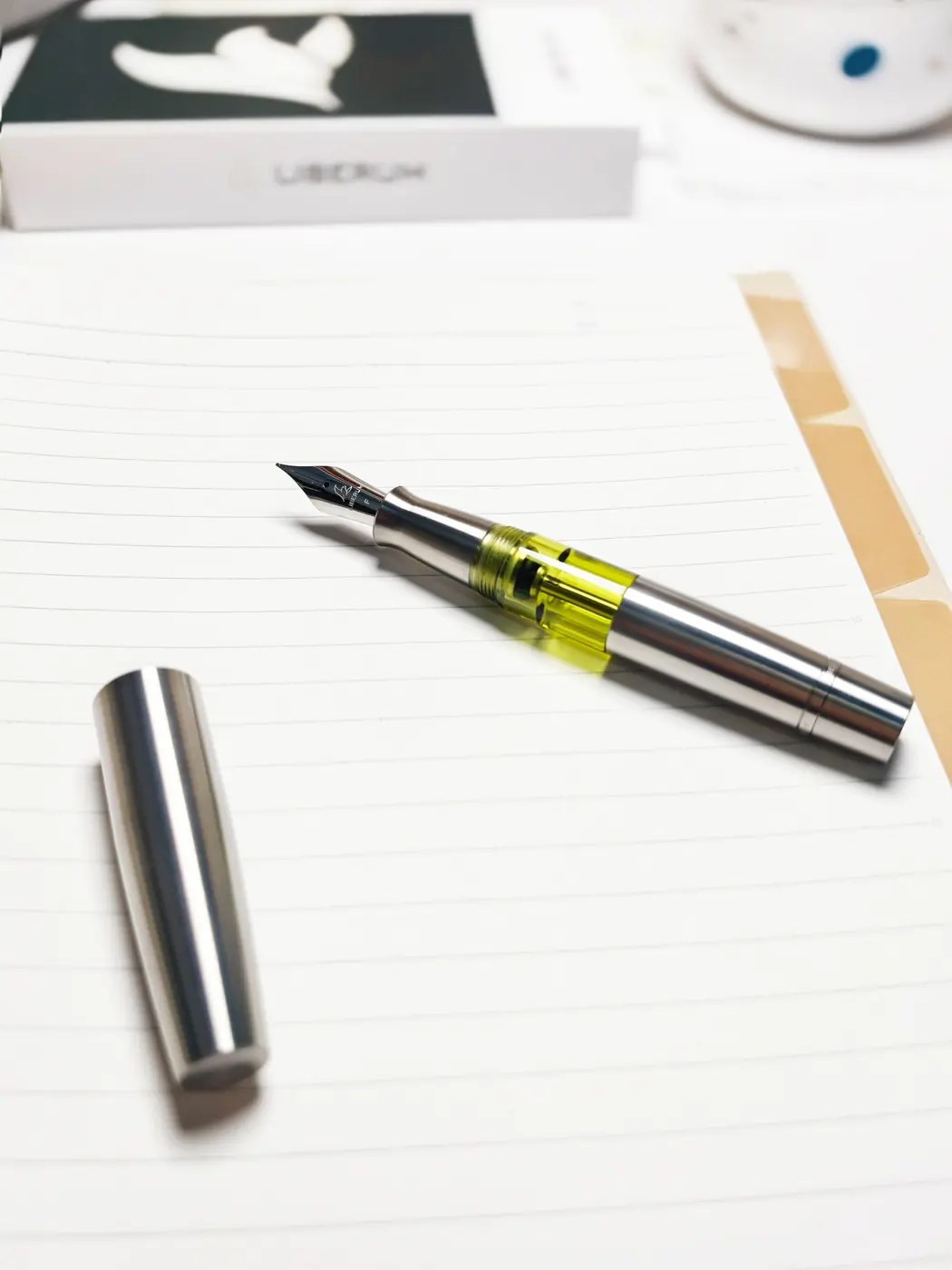
Volucris is approximately 120 mm with the cap fitted. That is a carrying measurement. It is not the length of the exposed body, and it is not the posted length. Check the dimension drawing on the product page if you need those numbers.
The practical question is not whether 120 mm is "small". It is whether 120 mm fits the pocket you have. A shirt pocket, an inside jacket pocket and a pen sleeve all accept a 120 mm pen comfortably. A jeans coin pocket does not. Measure the pocket's usable depth and width, including the clip, before you buy.
Where your fingers land
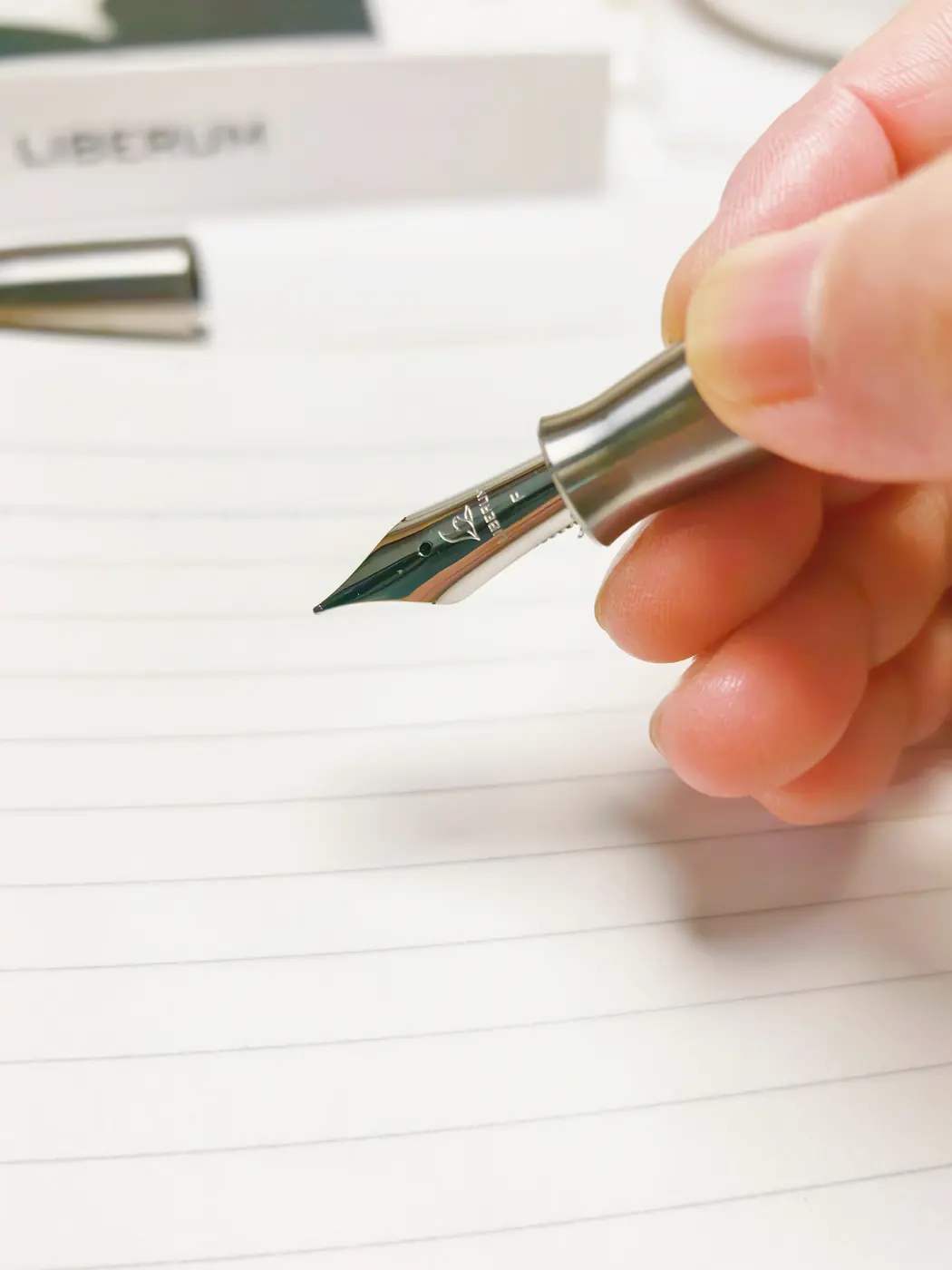
A shorter pen does not just sit differently in a pocket. It changes the grip.
On a 135 mm pen, most people hold the section with the back of the barrel resting against the web of the hand. On a 120 mm pen, the same grip puts the back of the barrel closer to the palm and moves the balance toward the nib. The result is a pen that feels controlled at slow speeds — signing, annotating, writing in a notebook on your knee — and slightly less relaxed when you are drafting quickly.
The barrel is 13.9 mm across. That is close to a Kaweco Sport and narrower than many machined metal pens, which often run 14.5 mm and up. If you have small hands, or you hold a pen close to the nib, this is the dimension that decides whether you like it. If you have large hands and hold a pen far back, a 120 mm pen will feel short before it feels wrong.
The weight is in the cap as much as the body
Titanium is 41.5 g capped and 28.4 g uncapped. Brass is 66 g capped and 42 g uncapped.
That gap matters. About 13 g of the titanium pen's total is the cap, so the part you actually hold is closer to 28 g. The pen feels lighter in use than the headline weight suggests. The brass version does not have that effect to the same degree: at 42 g uncapped, it is a pen you notice every time you pick it up.
| Model | Capped | Uncapped | What it feels like |
|---|---|---|---|
| Titanium | 41.5 g | 28.4 g | Light enough to forget, stable enough to feel deliberate |
| Brass | 66 g | 42 g | Heavy, warm, and obvious in the hand |
If you write for long stretches, titanium is the easier choice. If you like a pen that announces its weight, brass is the point, not a drawback. Neither material makes the pen comfortable for every hand.
The nib: #6 size, EF to B width
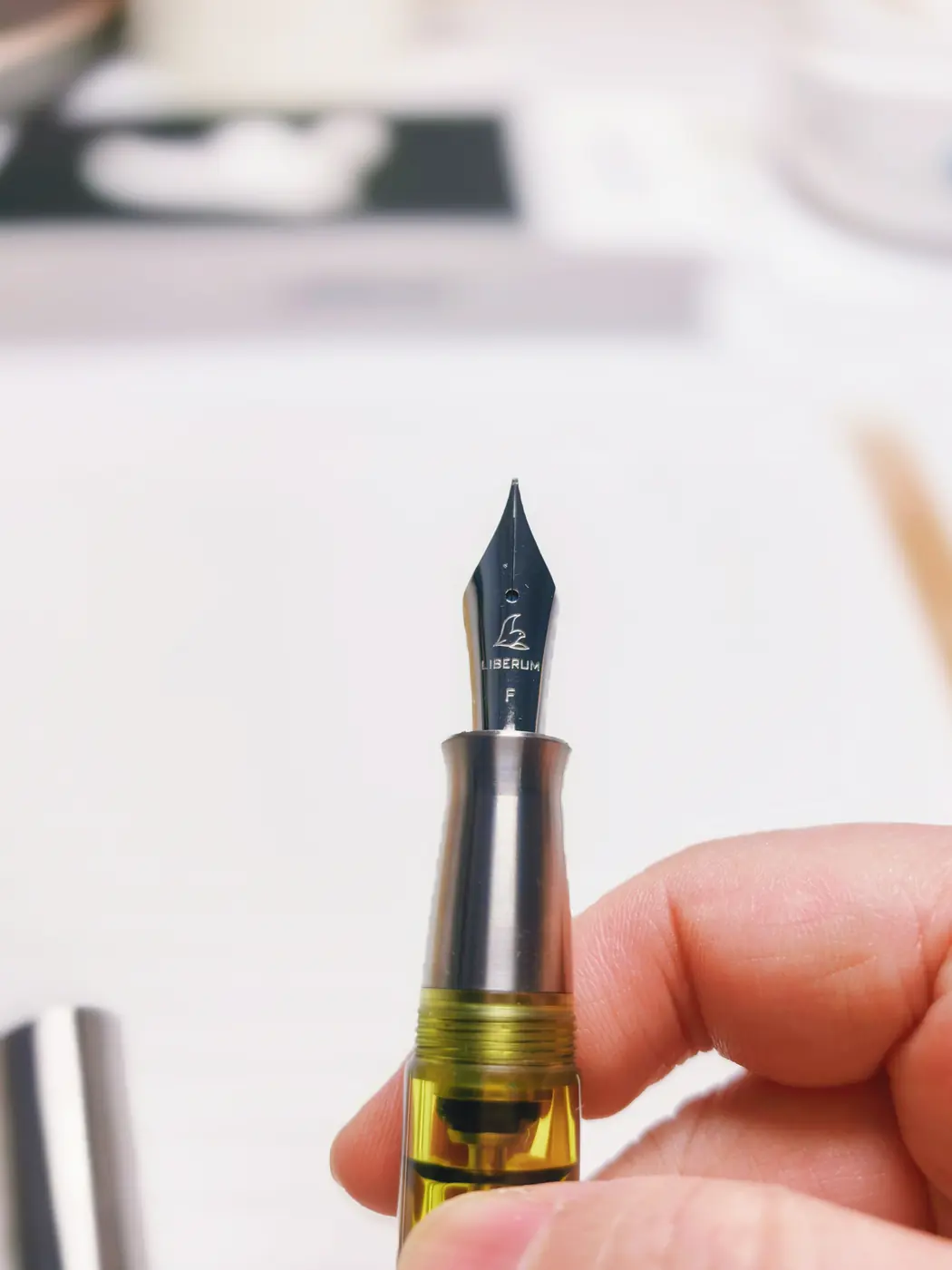
Volucris uses a #6 stainless steel nib in extra fine, fine, medium or broad. The #6 is a size family, not a brand. It describes the nib's physical size, not how wide or wet the line will be. Width comes from the tipping, the feed, the ink and the paper.
The housing is threaded to the JoWo #6 standard. That is worth having: you can unscrew the whole unit and replace it with another JoWo #6 unit instead of being tied to one supplier. Liberum has confirmed the assembly compatibility. It does not mean every nib sold as "#6" will fit, so check the complete unit.
The ink window earns its place
An ink window is not decoration. It answers the question you would otherwise answer by shaking the pen: is there enough ink for the next page?
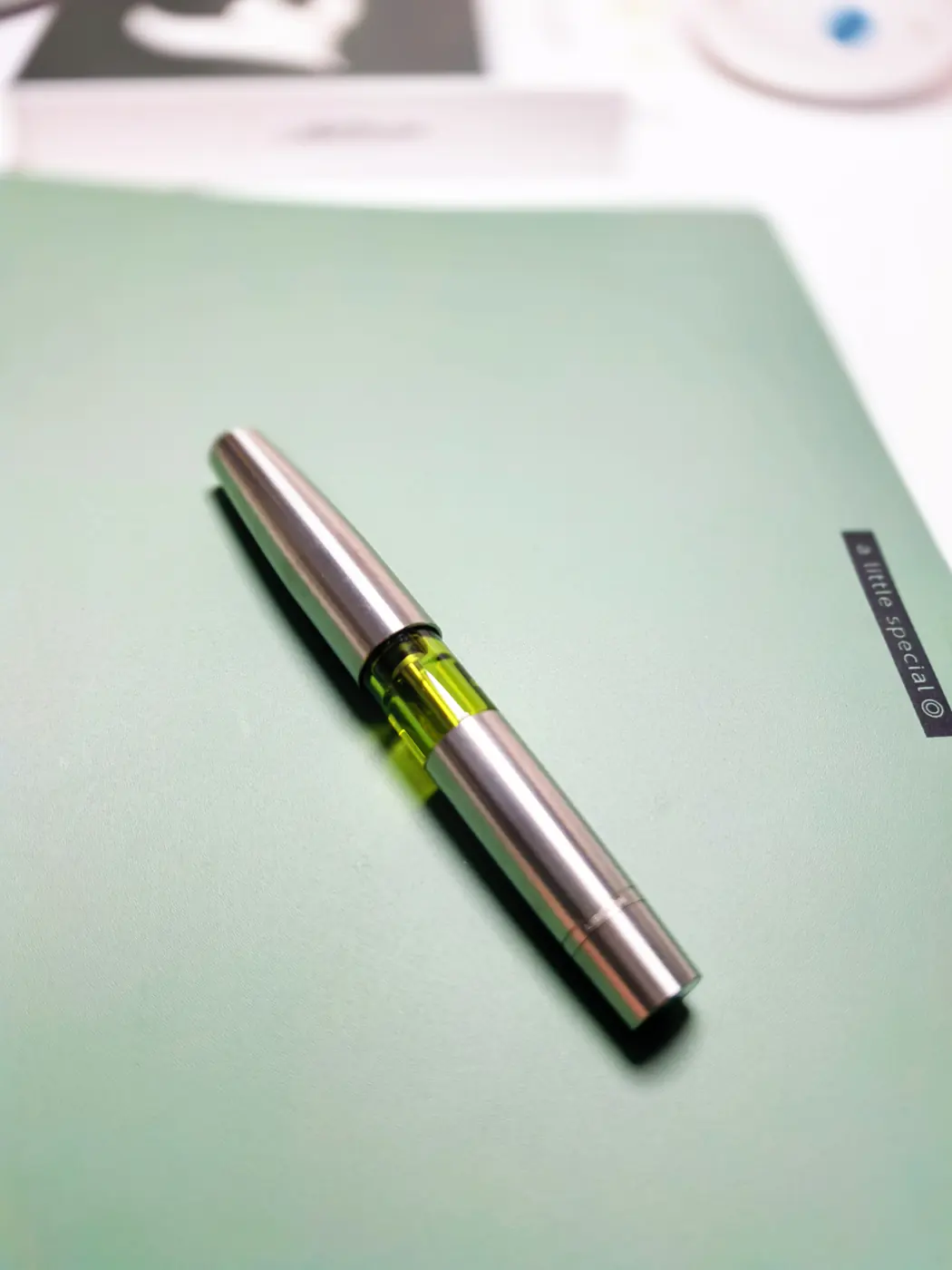
On a vacuum filler, the window is more useful than on a converter pen. The ink sits behind a piston inside the barrel, so the level you see is the actual reserve. The titanium version uses a green window; the brass version uses a clear one. That is a design choice, not a performance difference.
Who it suits
- Small to medium hands, or anyone who grips close to the nib.
- Shirt and jacket pockets, where a 135 mm pen is too long and a 90 mm pen is too small.
- Short writing sessions — notes, signatures, a page in a meeting. The balance favours control over speed.
- People who change nibs. The JoWo housing is the reason to choose this over a pen with a proprietary nib.
It is a worse choice if you write for hours and want the lightest possible pen, if you dislike a heavy pen, or if you need something that disappears into a jeans coin pocket. In those cases, the pocket fountain pen comparison covers the shorter and lighter options.
Titanium or brass?
The honest answer is that it comes down to 41.5 g versus 66 g. The length, nib, filling system and price are the same.
- Titanium Volucris: 41.5 g capped, 28.4 g uncapped, green ink window.
- Brass Volucris: 66 g capped, 42 g uncapped, clear ink window, develops a patina.
- All pocket fountain pens: the full range with dimensions.
- Vacuum filler fountain pens: how the filling system fits into a 120 mm body.
- Fountain pen gift guide: if you are buying for someone else.
Liberum makes the Volucris. Measurements come from the product catalogue; the judgments about grip, balance and pocket fit come from using the pen.